Review: This Actually Is My First Rodeo Cowboy
As a designer who spends more time than I care to admit staring at stitch density charts and testing thread tensions, I approach every new digital asset with a healthy dose of skepticism. The market is flooded with generic clip art that looks fine on a screen but falls apart when pushed through an embroidery machine. However, when I first pulled up the This Actually Is My First Rodeo Cowboy design from the T-Shirt Designs category, something felt different. It wasn’t just another text-heavy graphic; it had a distinct personality that suggested it was built for real-world application, not just as a placeholder image.
I evaluated this design specifically for its potential in commercial and personal embroidery projects. My goal was to determine if This Actually Is My First Rodeo Cowboy could hold up under the scrutiny of a finished product—whether that be a boutique sweatshirt, a personalized baby gift, or a high-volume craft fair item. Here is my practical breakdown of how this design performs in the hoop.
The First Impression: Mood and Visual Personality
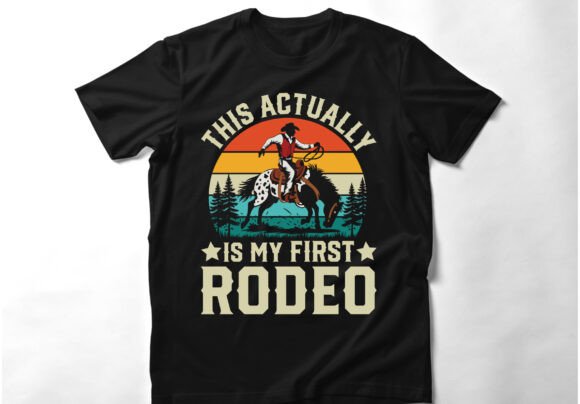
The immediate appeal of This Actually Is My First Rodeo Cowboy lies in its retro country aesthetic. The typography carries that classic, slightly distressed western vibe that resonates strongly with current trends in handmade apparel. When you look at the layout, it doesn’t feel cluttered. There is a clear hierarchy in the text, which is crucial for readability once the design is stitched. For an embroidery file, legibility is king. If the customer can’t read the phrase within three seconds of seeing the garment, the design has failed.
The visual weight of the design suggests it belongs in the casual wear category. It feels rugged yet playful, making it ideal for custom apparel that aims for a "lived-in" look. Unlike overly intricate floral patterns that require expensive silk threads to shine, this design relies on strong shapes and clear lettering. This makes it a safer bet for beginners and seasoned professionals alike, as it forgives minor stitching inconsistencies better than delicate script fonts.
Real-World Application: Where Does It Fit?
To truly test a design, you have to imagine it on a physical object. I ran several mental scenarios for This Actually Is My First Rodeo Cowboy, focusing on common small business products.
- Sweatshirt Embroidery: This is perhaps the strongest use case. The chunky, retro font pairs beautifully with the heavy texture of fleece or cotton blends. Placing this on the chest of a crewneck sweatshirt creates an instant statement piece. The contrast between the soft fabric and the structured embroidery adds value to the final product.
- Tote Bag Design: Canvas totes are a staple for Etsy sellers. Because this design is relatively compact, it fits perfectly on the front panel of a standard canvas tote without overwhelming the bag’s utility. It serves as both branding and a fun accessory.
- Baby Embroidery: While the phrase is humorous for adults, it translates surprisingly well to baby onesies or burp cloths as a novelty gift. Parents love items that reflect their lifestyle or sense of humor. However, placement is key here—centered on the chest or angled on the shoulder works best.
- Embroidered Patch: The self-contained nature of the design makes it a candidate for an applique design or a standalone patch. You could easily add a border and attach it to denim jackets or backpacks, expanding the design’s versatility beyond just direct-to-garment stitching.
Technical Performance and Stitch Considerations
When reviewing an embroidery file, I always think about the mechanics of the stitch. This Actually Is My First Rodeo Cowboy appears to utilize a mix of fill stitches for the background elements and satin or running stitches for the text outlines. This combination is generally efficient, meaning less hooping time and fewer thread breaks.
However, there are specific areas where caution is required. If your machine struggles with dense stitch areas, pay close attention to the thickest parts of the letters. Over-stitching can cause the fabric to pucker, especially on lightweight materials. I recommend checking the stitch density before committing to a large production run. If the design includes any tiny decorative accents, inspect them closely; sometimes, details that look good in vector software become invisible blobs after stitching.
Another critical factor is thread color contrast. The design’s retro palette likely relies on dark backgrounds with light text or vice versa. When digitizing or selecting your threads, ensure you have enough contrast to make the text pop. On dark fabric, using a white or cream thread will give it that authentic vintage look, while bright colors might make it feel too modern and clash with the retro theme.
Fabric and Stabilizer Choices
The success of This Actually Is My First Rodeo Cowboy heavily depends on what you stitch it onto. Avoid thin, stretchy fabrics like sheer polyester or loose-knit jerseys unless you are using heavy-duty stabilizers. The tension required for the fill stitches can distort these materials. Instead, stick to stable fabrics like cotton twill, denim, fleece, or canvas.
If you are working with textured fabrics, such as a boucle knit or a heavy tweed, the design may lose some of its crispness. The bumps in the fabric can interfere with the needle penetration, leading to uneven stitches. In such cases, a cut-away stabilizer is non-negotiable to keep the design flat and professional.
Commercial Viability and Customer Appeal
For craft business owners and Etsy sellers, the question isn't just "does it look good?" but "will it sell?" This Actually Is My First Rodeo Cowboy taps into the popular country-western and rustic aesthetics that remain consistently strong in the handmade market. It appeals to a broad demographic, from rodeo enthusiasts to those who simply appreciate farmhouse decor.
The design’s versatility allows for multiple product lines. You can create a cohesive collection featuring matching hats, aprons, and kitchen towels. This consistency builds brand recognition and encourages customers to buy multiples. Furthermore, because the design is humorous and relatable, it performs exceptionally well as a personalized gift. Customers often seek out items that express their identity, and this phrase does exactly that.
Practical Designer Notes for Execution
Before you upload this file to your machine, follow these essential steps to ensure a flawless finish:
- Test on Scrap Fabric: Never assume a design will work perfectly on your target material. Run a test stitch on a scrap piece of the actual fabric you plan to use. Check for puckering, thread breaks, and alignment.
- Check Hoop Size: Ensure the design dimensions fit comfortably within your machine’s maximum hoop size. If you are planning to embroider on curved surfaces like caps, verify that the design can be adapted for 3D puff embroidery or requires a specialized cap frame.
- Inspect Small Details: Zoom in on the digital preview. Are there any isolated pixels or tiny elements that might get lost? If so, consider simplifying the design or increasing the minimum stitch length in your digitizing software.
- Confirm Licensing: Since this is a digital embroidery file, review the license agreement carefully. Determine if you are allowed to sell finished products made from this design. Some creators restrict commercial use, while others allow it with attribution. Protect your business by understanding these terms upfront.
- Black and White Mockup: Convert the design to black and white in your editing software. This helps you see the true balance of positive and negative space, ensuring the design remains visually appealing even without color.
Final Verdict
This Actually Is My First Rodeo Cowboy is a solid addition to any designer’s library. It strikes a good balance between style and technical feasibility. It is not overly complex, which reduces production time, yet it has enough character to stand out in a crowded marketplace. Whether you are creating a one-off gift for a friend or building a line of boutique merchandise, this design offers reliable performance and broad appeal.
By paying attention to fabric choice, stabilizer support, and thread contrast, you can elevate this simple graphic into a premium-looking finished product. It is a smart, practical choice for anyone looking to add a touch of western charm to their embroidery projects.